A manual electric tapping machine is one of the solutions used to produce threads in industrial environments. However, there are significant differences between conventional hand tools, portable electric tools, articulated tapping arms and fully automated systems.
The choice directly affects accuracy, ergonomics, productivity and cost per part. In this context, Roscamat electric tapping machines with articulated arms offer a solution that combines the flexibility of operator-controlled operation with the advantages of equipment specifically designed for industrial tapping.
Four Systems for Industrial Tapping Operations
In the metalworking industry, threads can be produced using four main methods, each with its own characteristics and limitations.
Manual Tapping with Conventional Tools
Manual tapping is performed using taps operated directly by the operator, generally with a tap wrench. It is an economical alternative for repairs, occasional operations or very low-frequency tasks.
However, it requires physical effort, involves longer processing times and depends on the operator’s skill to maintain alignment and control the process. In repetitive applications, these limitations affect both productivity and thread consistency.
Tapping with Portable Electric Tools
Portable electric tools make it possible to produce threads without manually performing the entire rotational movement. Their main advantage is mobility, particularly for maintenance work or operations carried out away from a fixed workstation.
However, the operator must support the weight of the tool, control the reaction torque and maintain perpendicularity to the workpiece surface. These conditions can cause fatigue, misalignment during tapping and quality problems, especially during continuous operation.
Roscamat Electric Tapping Machine with Articulated Arm
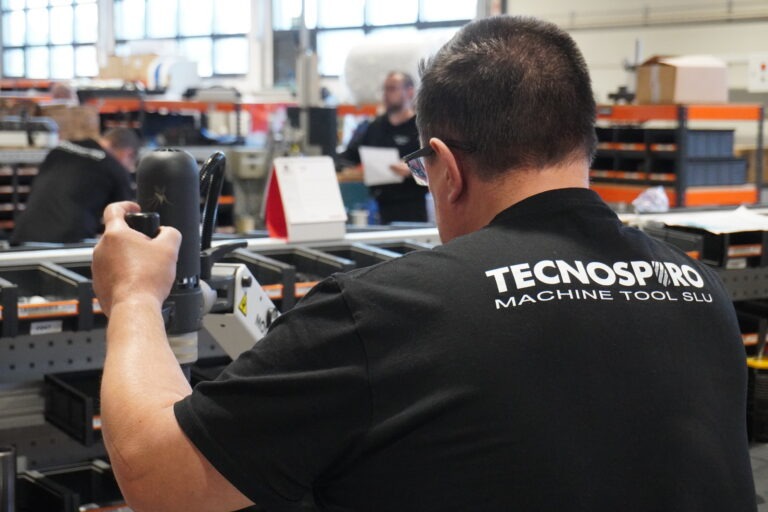
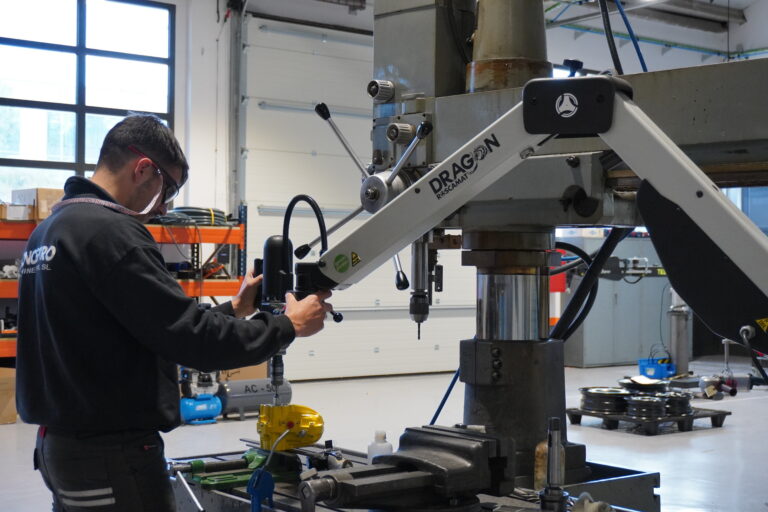
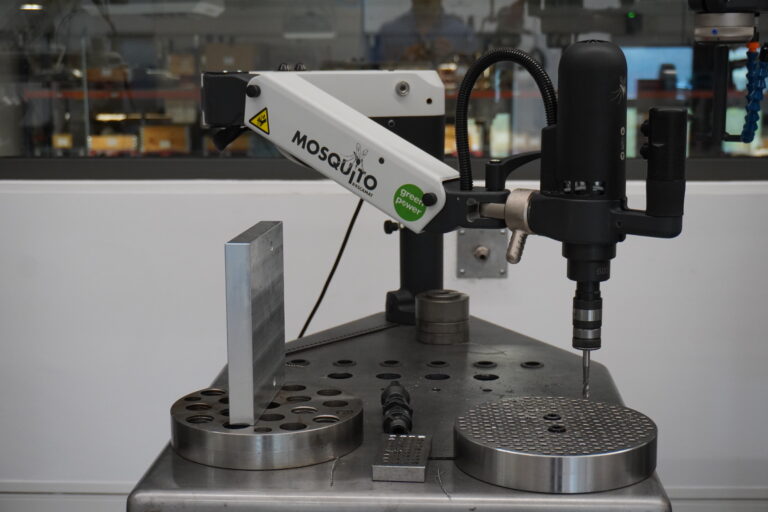
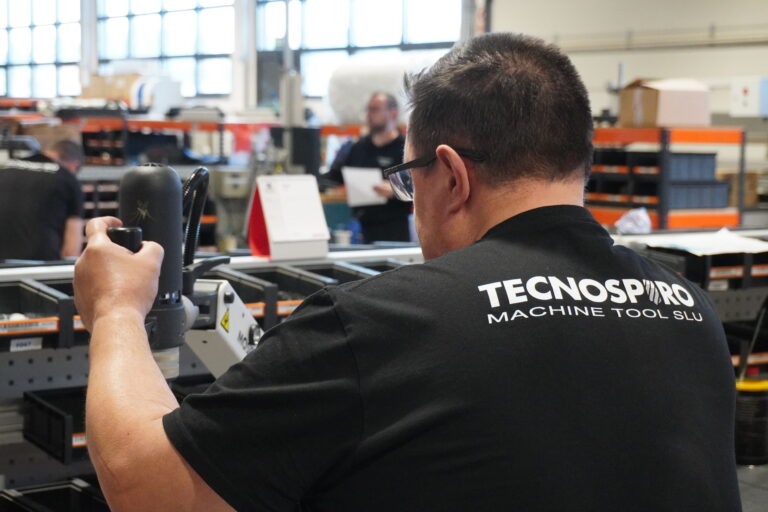
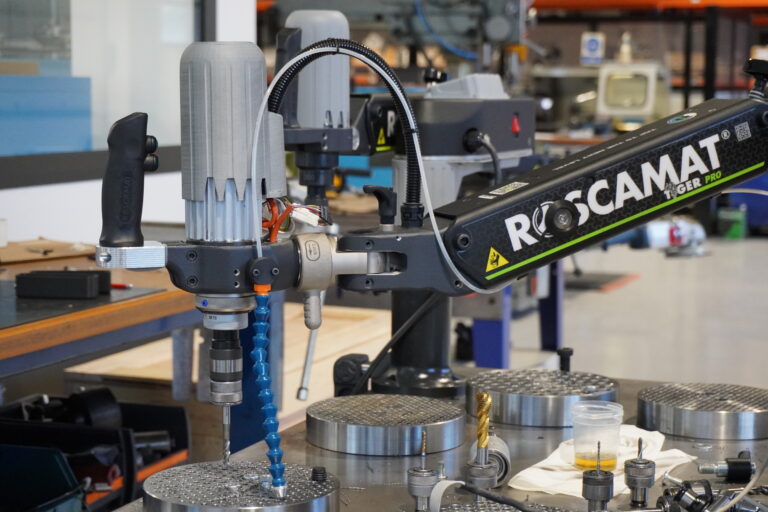
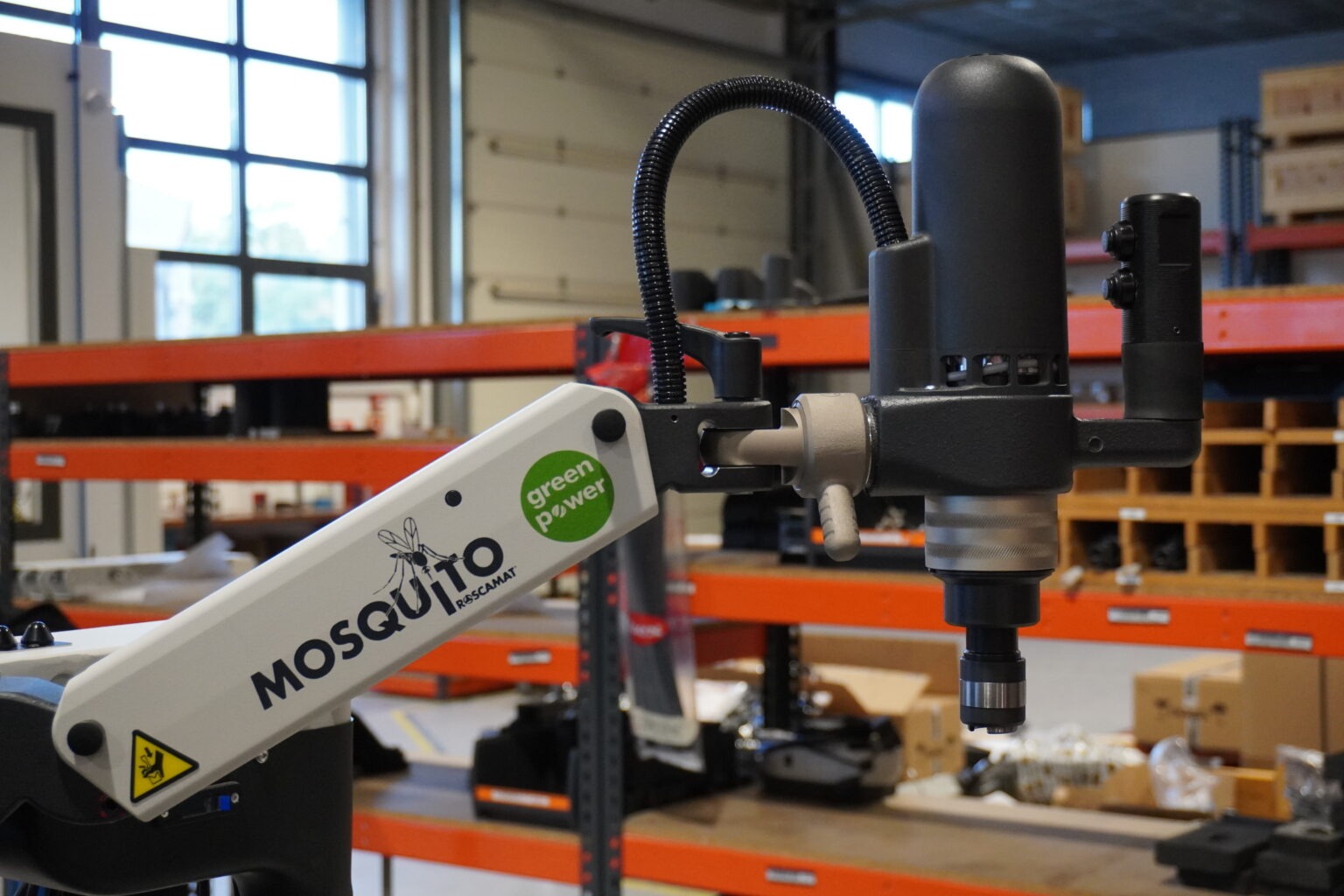
The Roscamat electric tapping machine with an articulated arm incorporates a mechanical system that supports and positions the motor unit, eliminating the need for the operator to carry its weight directly.
The articulated arm facilitates movement between different tapping points and helps maintain tool perpendicularity to the workpiece, improving accuracy and process repeatability.
Unlike a conventional portable tool, the equipment is specifically designed for industrial tapping operations, with speed and torque configurations and accessories adapted to different materials, thread diameters and production requirements.
Tapping with Automated Systems
CNC machining centres, industrial robots and cobots allow tapping to be integrated into automated processes, reducing direct operator intervention.
These solutions are particularly suitable for large production runs, stable geometries and production lines with demanding cycle-time requirements. However, they require higher investment, programming, integration and, in many cases, specific fixtures.
In production environments with frequent part changes, setup and adaptation costs can limit their profitability compared to more flexible systems.
Advantages of a Roscamat Electric Tapping Machine Over Other Methods
Greater Accuracy and Perpendicularity During Tapping
One of the main challenges when tapping with portable tools is maintaining correct alignment between the tap and the hole.
Roscamat articulated tapping arms facilitate positioning and help maintain perpendicularity throughout the operation, reducing dependence on operator skill and the risk of misalignment that could compromise thread quality.
Ergonomics and Reduced Physical Effort
During repetitive operations, the weight of a portable tool and reaction forces can cause fatigue and make process control more difficult.
The articulated structure supports the motor unit and facilitates handling, improving industrial ergonomics at the workstation. This is particularly important in workshops performing multiple tapping operations per shift.
Productivity Without Full Automation
A Roscamat electric tapping machine enables successive tapping operations without requiring a dedicated automated cell.
Its mobility within the working area, ease of positioning and compatibility with quick-change tap holders help reduce auxiliary times and speed up changeovers.
This represents an advantage for manufacturers working with small and medium production runs, different geometries and variable production requirements.
Flexibility and Lower Integration Investment
Compared with a robotic system or a dedicated CNC workstation, a tapping arm generally requires simpler integration infrastructure.
It can also be adapted to different parts and operations without the need to develop specific programming for each part reference, preserving operator involvement and the ability to respond to production changes.
Roscamat Solutions for Different Industrial Requirements
Roscamat has been developing articulated-arm tapping solutions since 1987, offering electric equipment designed for different tapping capacities and industrial applications.
Models such as Roscamat Mosquito are intended for lower-capacity tapping operations, while Roscamat Tiger offers configurations for applications with higher torque requirements.
The availability of different motors, speeds, tap holders and accessories makes it possible to select a suitable configuration according to thread diameter, material, workpiece geometry and production rate.
When Should You Choose an Electric Tapping Machine with an Articulated Arm?
A Roscamat electric tapping machine is particularly suitable when manual tapping or portable tools present limitations in ergonomics, accuracy or productivity, but production volumes do not justify full automation.
It is also an alternative for workshops that need to maintain operational flexibility, machine different part references or perform tapping operations outside CNC machining centres, freeing up machining capacity for higher-value processes.
The decision does not depend solely on the number of threads produced, but on achieving an accurate, ergonomic and cost-effective process.
At Roscamat, we develop industrial tapping solutions adapted to different manufacturing requirements. Contact our technical team to select the electric tapping machine with an articulated arm best suited to your application.