The acquisition of mechanical capital goods in the B2B sector demands a rigorous technical approval process to avoid bottlenecks in the final finishing stages. In European metalworking plants, freeing expensive CNC machining centers from secondary tapping tasks has consolidated as an indispensable strategy to reduce the cost per piece and optimize cycle times.
However, transferring these operations to an auxiliary station requires selecting an electric tapping machine that possesses the stiffness, control electronics, and kinematic compatibility necessary to avoid compromising the quality of the intermediate components. Erroneous decisions in the industrial purchasing department not only lead to the systematic fracture of cutting taps, but also to the complete discarding of complex dies and unplanned shutdowns of assembly lines.
Evaluation of motor torque and dynamic stability against mechanical fatigue
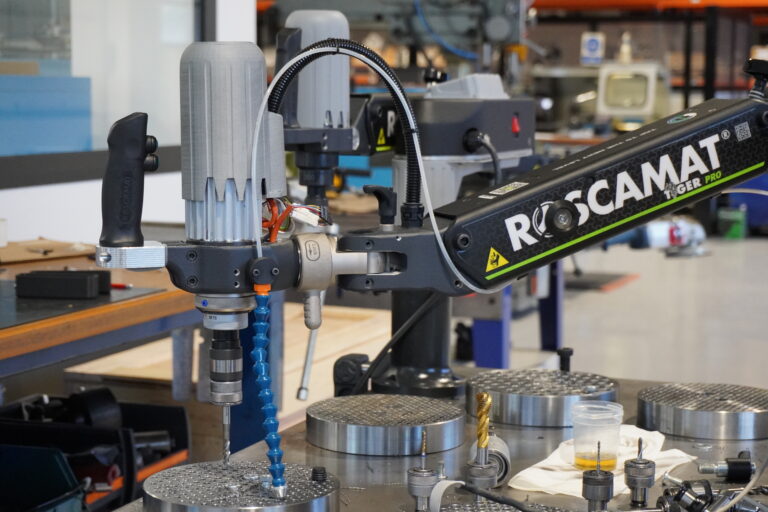
The first critical parameter that industrial purchasing managers must audit is the nature of the motorization and its behavior under severe torque conditions. Unlike obsolete pneumatic arms that suffer drastic pressure drops and speed variations depending on the compressed air network, modern high-performance tapping machines implement high-frequency electric servomotors.
These architectures guarantee that the torque remains constant even at the lowest revolutions, an essential factor when tools for CNC Machining face the transition between light alloys such as aluminum and high-hardness refractory metals such as stainless steels or titanium.
The correct dimensioning of the motor based on the factory’s needs represents the second technical control filter. Structural demands, gear systems, and collet capacity vary significantly whether the machine is designed to cover light metric threads or if it is required for large-scale heavy operations.
Programmable digital control and automatic reversal functions in blind holes
The successful integration of a tapping machine into an advanced manufacturing and connected industry environment strictly depends on its control interface and the suppression of the human error factor. Technical purchasing departments should prioritize equipment that integrates digital numerical control systems through intuitive touch screens.
These screens allow parametrizing the exact depth dimension in the Z-axis in millimeters, ensuring that the spindle stops its advance and reverses the direction of rotation instantly and automatically upon reaching the programmed distance, a critical function to avoid tap collision at the bottom of blind holes.
Amplitude of positional coverage area and kinematics of articulated arms
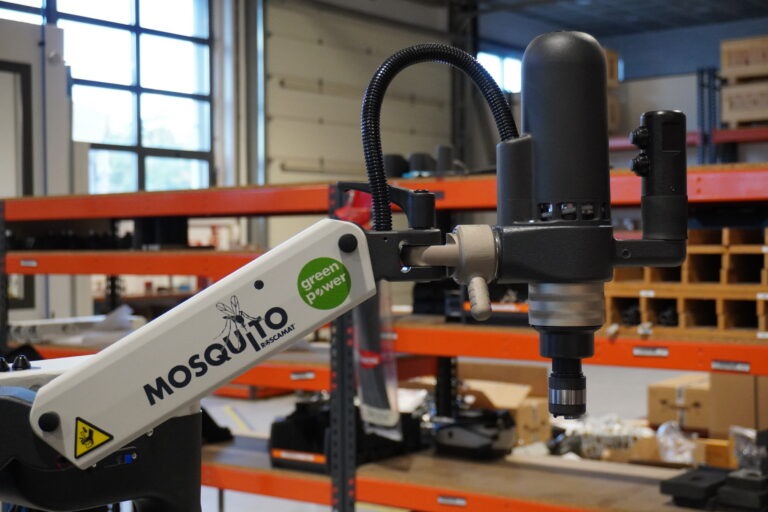
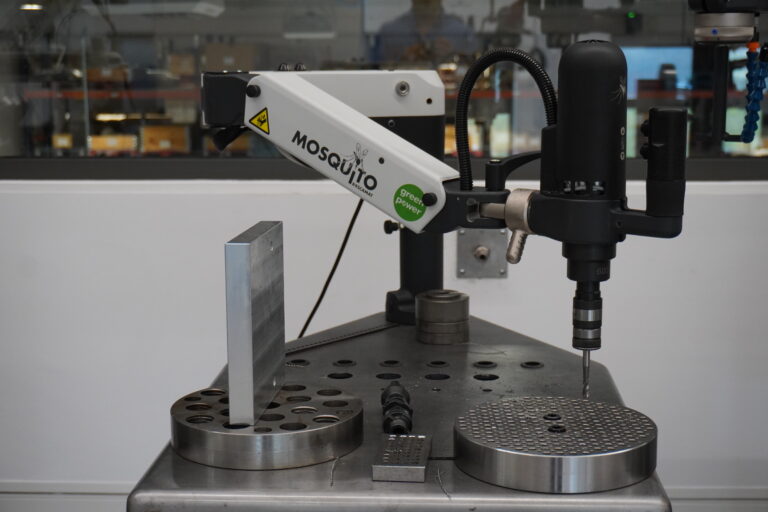
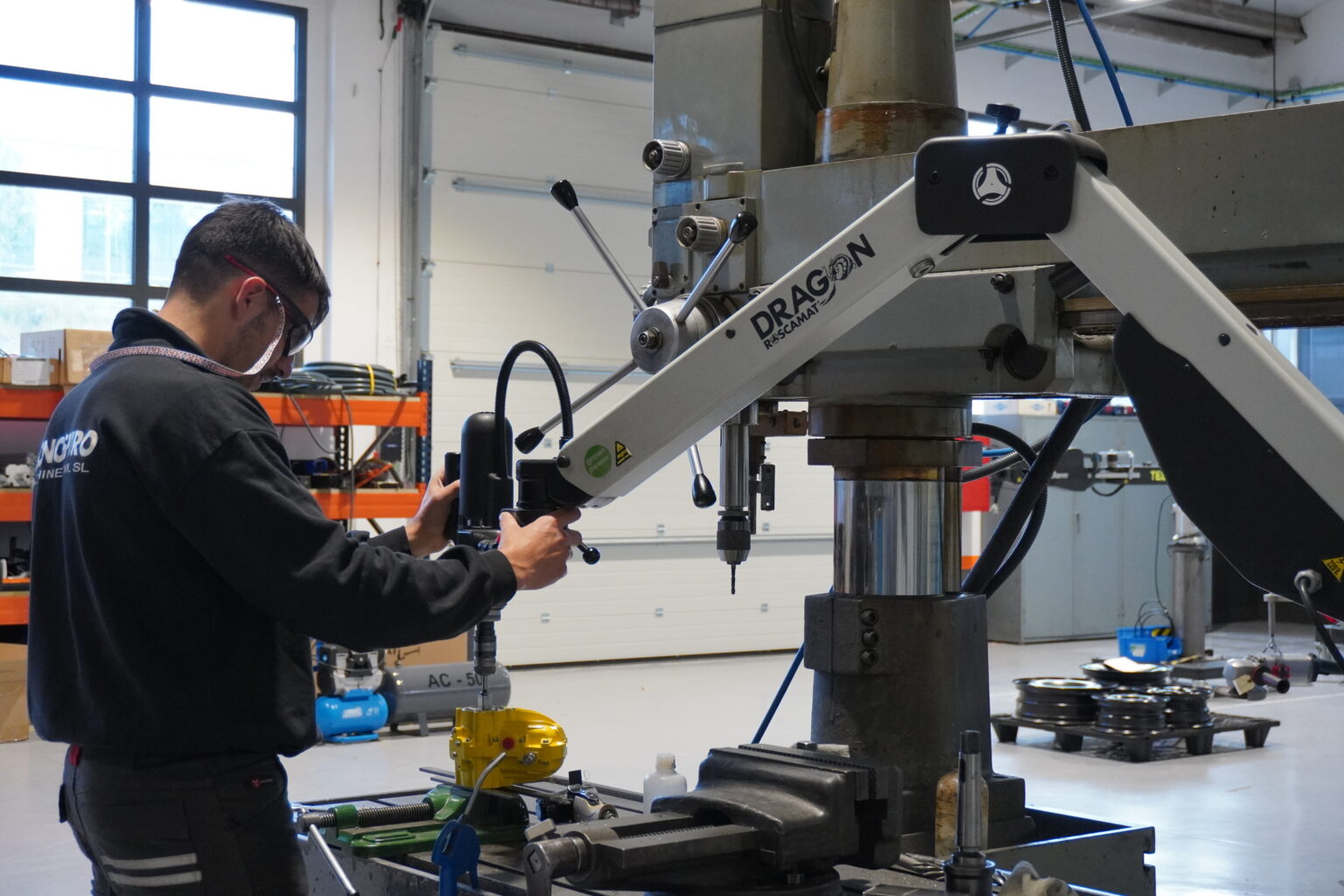
The reach radius of the weightless radial arm constitutes another unavoidable variable that must be contrasted with the dimensions of the most voluminous parts machined in the plant. Articulated parallel arm structures typically offer standard coverages between 1,200 mm and 1,800 mm, allowing the operator to cover wide areas of the workbench without the need to reposition the fixing base or the parent part itself. The perfect balancing through gas struts ensures that the handling of the head demands minimal physical strength, protecting the occupational health of the workshop’s technical staff.
Tool holding systems with safety clutches and electrical infrastructure
The last block of the procurement checklist covers the clamping systems for CNC Machining Tools and the adequacy of the industrial building’s electrical infrastructure.
Advanced tapping machines implement quick-change chucks compatible with standardized high-precision collets, which eliminates downtime when alternating between complementary operations such as deburring, countersinking, or taps of different pitches. It is fundamental to demand that these collets incorporate adjustable safety clutches against mechanical overloads; if the tap encounters compacted chips or an excessively narrow pre-drilled hole, the clutch slips automatically, stopping torque transmission and safeguarding the integrity of the cutting tool.
On the logistical and plant level, the purchasing department must meticulously verify the voltage and amperage required by the equipment. While light portable models can operate on standard single-phase connections, heavy high-frequency stations demand stable 220V supplies that sometimes require the installation of dedicated transformers depending on the building’s electrical distribution.
Operational sustainability and compliance with energy efficiency directives in the Eurozone
The modernization of the manufacturing fabric within the framework of the European Union is conditioned by the replacement of resource-consuming technologies with smart electromechanical solutions that reduce the carbon footprint.
Traditional pneumatic tools represent a source of severe economic inefficiency due to constant leaks and pressure drops in the building’s compressed air networks. In contrast, industrial tapping machines driven by induction electric servomotors optimize energy consumption by demanding power exclusively during the active tap penetration cycle, facilitating compliance with energy management audits under the international ISO 50001 standard.
The digital standardization of torque and depth eliminates the variability linked to the manual skill of the operator, homogenizing the quality of finishes regardless of the work shift. This guarantees that each thread pitch adapts with millimetric precision to the tolerances demanded by high-responsibility sectors such as automotive, rail, or high-pressure valves.
Optimize your industrial finishing processes with Roscamat engineering
The success of an industrial purchasing strategy in the machining sector does not lie in the search for isolated nominal specifications, but in the choice of a technological partner that understands the interaction between mechanical robustness, digital process control, and the financial profitability of the workshop.
At Roscamat, we design and manufacture high-frequency electric articulated arm systems specifically engineered to integrate fluidly alongside your CNC machining centers, guaranteeing the total eradication of shutdowns due to tap breakage and maximizing your plant’s OEE. If your operations department is ready to optimize manufacturing costs and standardize the quality of your parts with a leading solution in Europe, we invite you to make technical contact with our specialist engineers. We will evaluate in detail the materials of your production, your kinematic requirements, and your automation goals to design a personalized technological proposal that immediately boosts the productivity and profitability of your business.