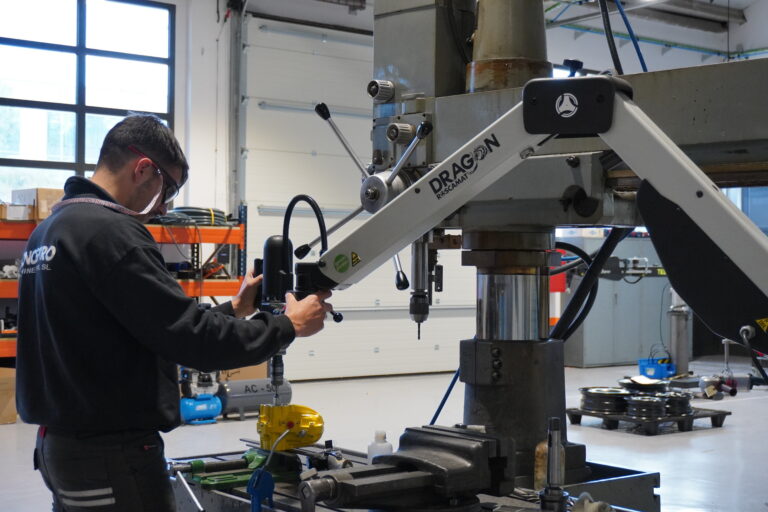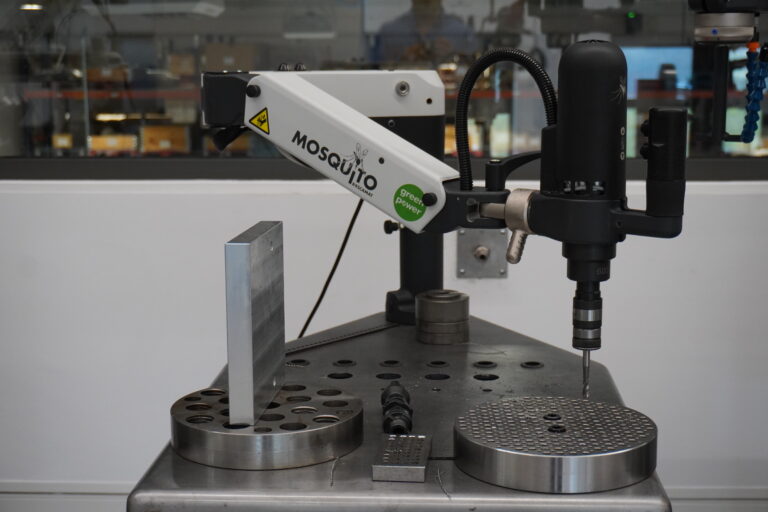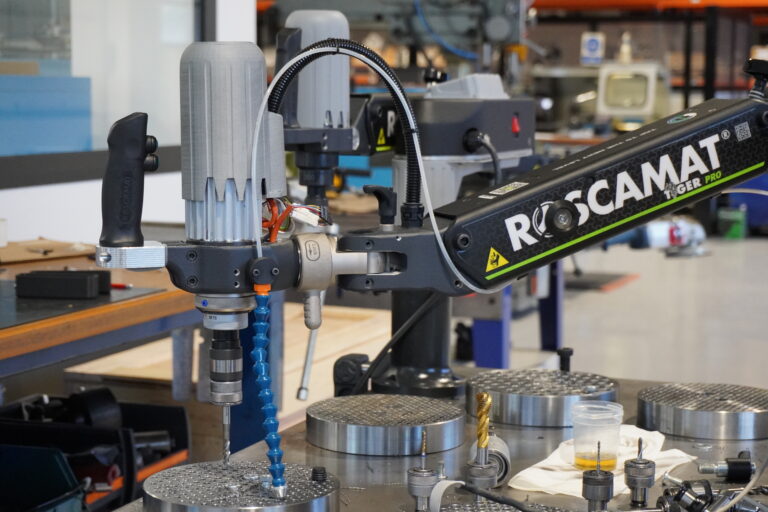
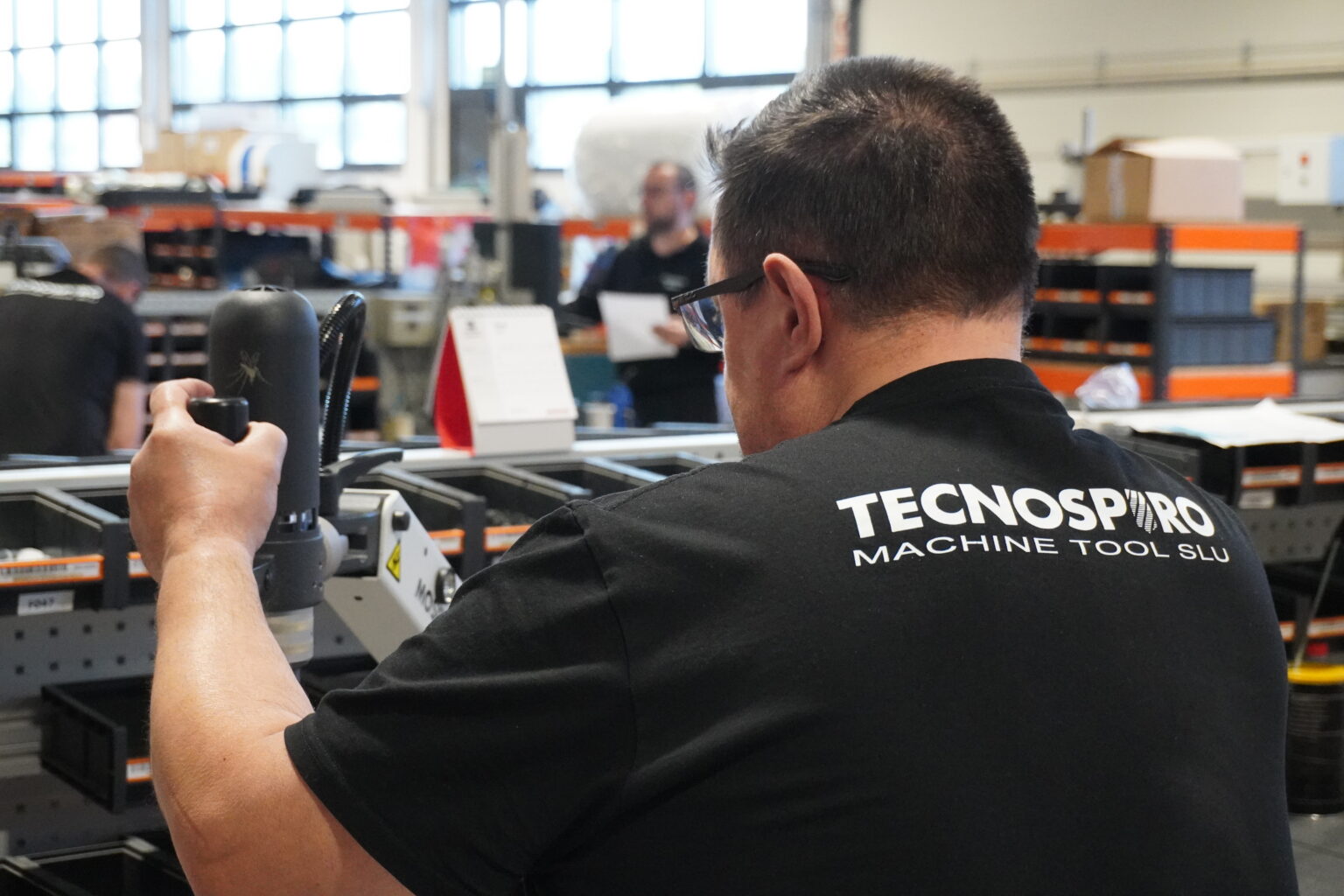
Tapping, historically prone to bottlenecks due to tap breakage and operator fatigue, has undergone a radical transformation thanks to articulated arm engineering.
When a metalworking plant faces the transition or expansion of its capabilities, the critical question is not whether to automate, but which is the best electric tapping machine to sustain a continuous production rhythm without drops in physical performance or geometric precision.
The management of the main factories in Europe evaluate the acquisition of capital goods based on accelerated technological amortization and the reduction to zero of failures due to material fatigue. The technical response to this demand does not lie in traditional fixed systems or high-energy-consumption pneumatic solutions, but in high-frequency electric motor ecosystems integrated into weightless structures.
The ideal choice depends strictly on three operational vectors: mechanical resilience under uninterrupted cycles, mitigation of ergonomic risks for the operator, and the flexibility of the equipment to integrate into complex industrial production schemes. Through this technical analysis, we will examine how the variables of motor torque, electronic control, and articulated arm kinematics determine the standard of today’s metallurgical industry.
Key factors in mechanical durability under intensive regimes
The viability of a continuous industrial production line is linked to the robustness of the motor and the transmission system of the tapping machine. Traditional brushed electric motors suffer severe thermal degradation when operated in triple work shifts, forcing plants to schedule mandatory technical stops. In contrast, the single-phase high-frequency architectures used in advanced equipment allow maintaining a constant and high torque even at the lowest revolutions, optimizing cutting in high-hardness materials such as alloy steels or titanium. The thermal stability of these motors minimizes friction deformations and ensures that the thread pitch is identical from the first to the last piece of the day.
Another critical component in the longevity of the equipment is the quick-change modular gear system. Having independent planetary reducers that adapt the revolutions per minute and the maximum torque according to the required metric avoids internal overloading of the central motor. Likewise, the incorporation of automatic tap lubrication systems, managed by adjustable electronic timers, guarantees that the cutting zone receives the exact dosage of oil. This not only multiplies the useful life of the chasers and taps, but also prevents micro-cracks in the articulated arm caused by unforeseen torsional stresses.
Adaptability to automation and control of processes
The transition toward smart factories and connected manufacturing demands that any workshop tool cease to operate in isolation. In the context of modern industrial production, an electric tapping machine must incorporate digital interfaces that allow process traceability and standardization. Electronic modules with digital screens integrated into the radial arm itself facilitate the configuration of critical parameters such as exact depth control in the Z-axis through internal sensors. This technology automatically stops and reverses the motor rotation upon reaching the programmed millimetric dimension, completely eliminating human error in blind holes.
Connectivity and data logging form the core of the competitive strategy for companies implementing advanced systems of industrial production and quality management. The capability of an equipment to monitor the number of cycles through partial and total digital thread counters allows plant engineers to accurately calculate cycle times and plan predictive maintenance of cutting tools before a catastrophic breakage occurs.
Selection criteria for the acquisition of B2B capital goods
When technical purchasing managers and operations directors evaluate market alternatives to optimize their assembly lines, the initial cost of the equipment must be weighed against the total cost of ownership over the long term. Pneumatic solutions, although economical in their initial acquisition, entail high energy expenditures due to the inefficiencies inherent to the compressed air networks of industrial buildings.
An electric tapping machine with high frequency drastically reduces electrical consumption and operates with notably lower acoustic emission levels, aligning with European ISO 50001 sustainability policies.
The second B2B decision criterion is the versatility of applications of the articulated arm itself. Subcontracting workshops cannot afford the luxury of having machinery dedicated to a single task if the volume of orders varies monthly. Quick-change systems using tap holders with or without a safety clutch allow the tapping machine to transform in a matter of seconds into a multifunctional station capable of performing complementary operations such as countersinking, chamfering, reaming, light drilling, or the rapid insertion of helical threaded inserts. This operational flexibility multiplies the equipment utilization factor in the plant, guaranteeing that the technological investment returns to the company’s cash flow in a timeframe significantly shorter than projected in conventional financial analyses.
Innovation and reliability in the European industrial fabric
The competitive position of the European manufacturing industry depends on its capacity to offer impeccable finishes within reduced logistical deadlines. In this scenario, outsourcing or maintaining obsolete manual tapping processes constitutes an unacceptable operational risk.
The experience accumulated by local engineering teams in the design of ergonomic solutions demonstrates that the integration of articulated arm technology not only protects the health of human capital, but also raises the quality standardization of the final product to levels that manual tools can never achieve. The structural robustness and electronic precision of high-frequency systems have consolidated themselves as the reference standard in the most demanding sectors of the continent, from automotive to heavy machinery development.
At Roscamat we understand that every second of inactivity in your plant represents a loss of competitiveness in the global market. Our high-frequency electric articulated arm solutions are specifically designed to withstand the most severe workloads of European industrial environments, guaranteeing perfect threads, eliminating tap breakage, and drastically improving the work environment for your operators. If your company is ready to make the qualitative leap toward optimum productivity, we invite you to get in touch with our team of specialist engineers.