Selecting a tapping machine should begin with the mechanical properties of the material, thread geometry and actual production conditions. The required torque, rotational speed and axial feed accuracy determine process stability, tool wear and the final quality of the machining operation.
In industrial applications, choosing a tapping machine based solely on its nominal tapping capacity can lead to productivity issues, tap breakage and dimensional variations. Material machinability, thread diameter and pitch, hole depth and operating frequency must all be evaluated together.
How Material Properties Influence Tapping Machine Selection
The cutting resistance, ductility and thermal behaviour of each material influence the selection of the machine and the appropriate Metal Cutting Tools. Two workpieces with identical thread geometry may require significantly different machining parameters.
Stainless Steel and High-Strength Alloys
Austenitic stainless steels have a strong tendency to work-harden and relatively low thermal conductivity. These characteristics increase the demands placed on tapping torque and heat dissipation.
The machine must provide sufficient torque at the selected operating speed without compromising rotational stability. Excessive speed, inadequate lubrication or a worn tool can accelerate cutting-edge deterioration and cause failures during rotation reversal.
Carbon Steel and Structural Materials
For carbon steels, machine selection depends on mechanical strength, metallurgical condition and chip formation characteristics. Free-machining steels allow more productive machining parameters, while higher-strength materials require adjustments to cutting conditions.
The rigidity of the machine-tool assembly, tap alignment and lubrication are essential for maintaining repeatability, particularly in deep threads and continuous production cycles.
Aluminium and Light Alloys
Aluminium generally allows higher cutting speeds, although its tendency to adhere to cutting surfaces requires particular attention to tap geometry and coating.
In ductile alloys, form tapping can provide an alternative to conventional cutting. This process displaces material without producing chips, but requires carefully controlled pre-drilled hole diameters and higher operating torque than certain cutting operations.
Tapping Torque and Speed: Criteria for Equipment Sizing
The required torque does not depend exclusively on nominal thread diameter. Thread pitch, material strength, percentage of thread profile formed, tap geometry and lubrication conditions also play a role.
An industrial tapping machine must have sufficient torque reserve to accommodate process variations without continuously operating at the limit of its capacity. This becomes particularly important when producing large-diameter threads or machining high-strength materials.
Speed must be adjusted according to the material and tool, considering that cutting speed is proportional to diameter and revolutions per minute. Consequently, maintaining the same RPM across different diameters changes the cutting conditions.
Electric and pneumatic tapping machines offer different adjustment capabilities and dynamic characteristics. The choice between them should be based on the operating range, required control and conditions of use, rather than solely on the power source.
Precision, Alignment and Repeatability in the Tapping Process
The accuracy of a tapping operation does not depend exclusively on the quality of the Precision Tools. Perpendicularity to the workpiece surface, alignment with the pre-drilled hole and freedom of axial movement directly influence thread quality.
Lateral forces caused by poor alignment can increase tap wear and produce geometric deviations. In repetitive production, these issues lead to greater variation in results and an increased need for corrective interventions.
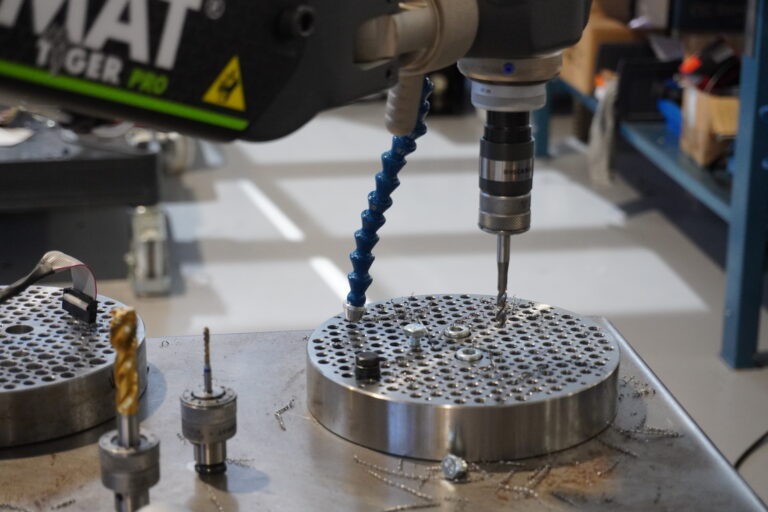
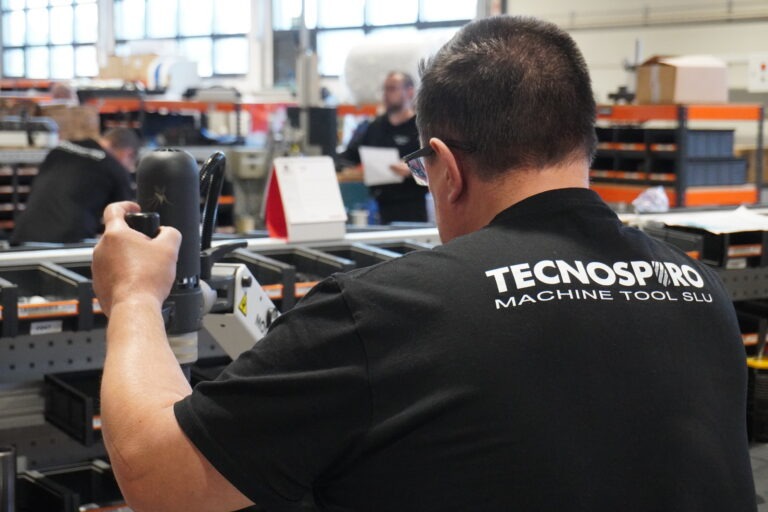
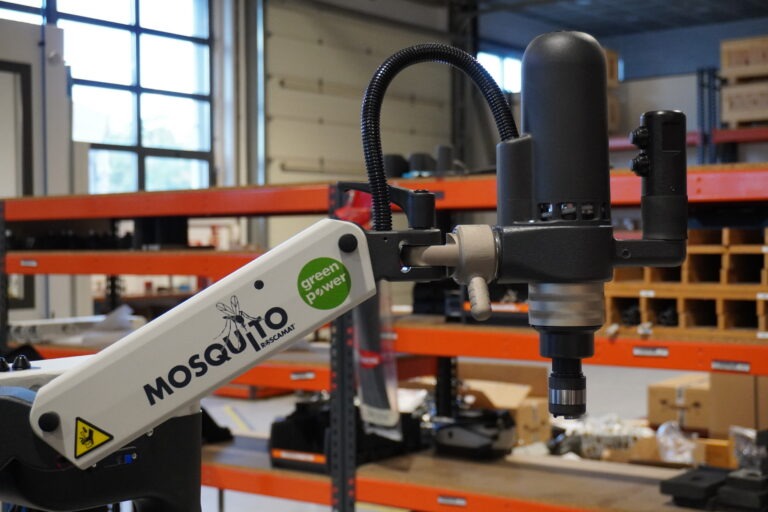
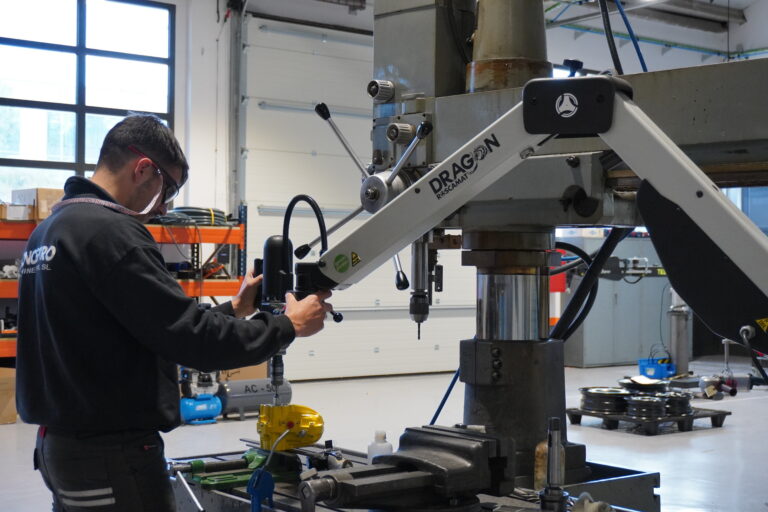
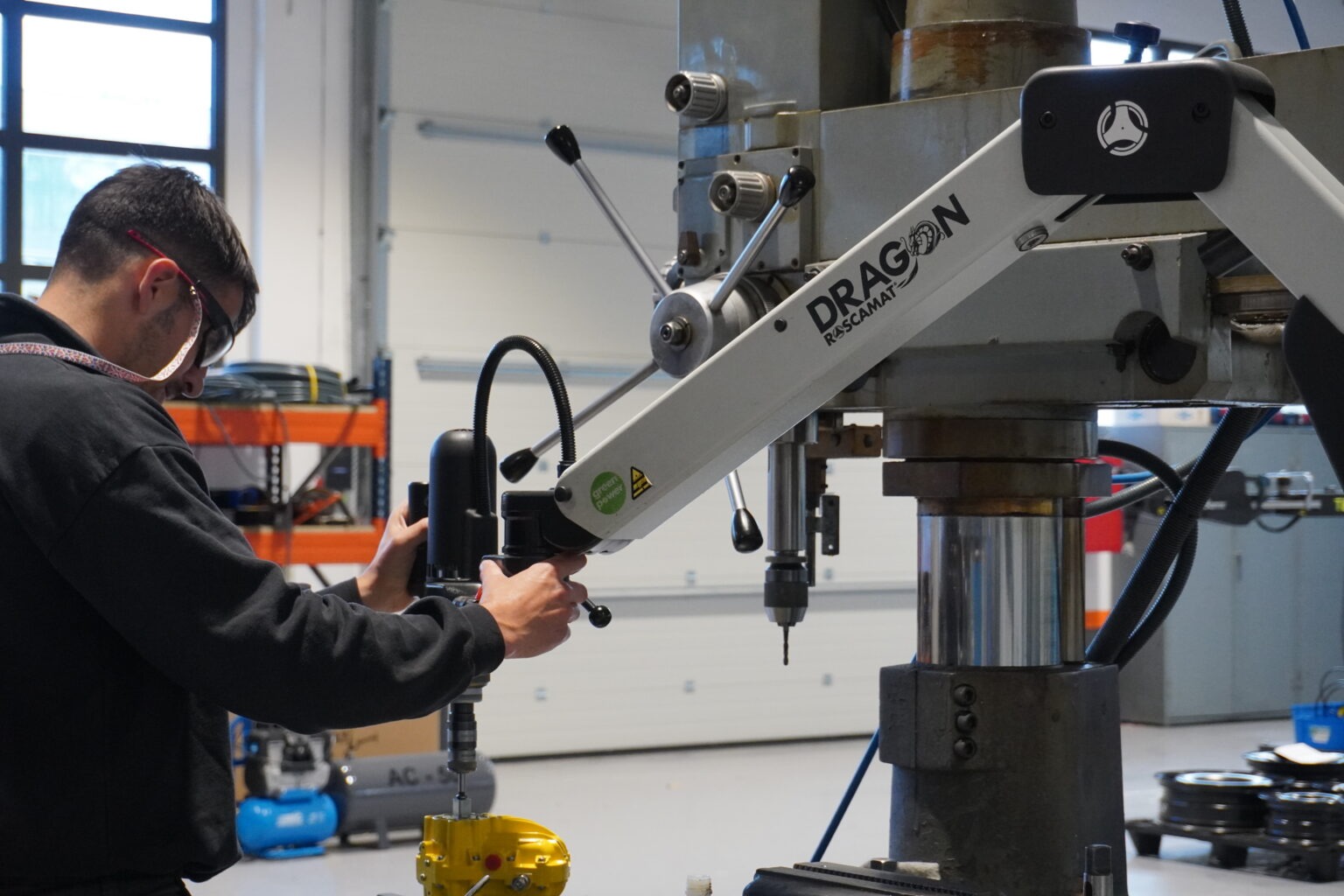
Articulated arm systems allow the tool to be positioned at different working points, reducing the need to handle large workpieces. Proper configuration facilitates tapping operations outside the CNC Machining Center and helps free up capacity on equipment with higher operating costs.
Roscamat: Tapping Solutions Adapted to Industrial Requirements
Choosing a tapping machine requires consideration of both material properties and equipment integration into the production process.
Roscamat develops industrial tapping solutions using articulated arm systems, with electric and pneumatic drive options to meet different manufacturing requirements.
Selecting the right equipment makes it possible to adapt the process to the thread size range, workpiece characteristics, frequency of use and ergonomic conditions of the workstation.
Contact our technical team to discuss your application requirements and select a solution that combines tapping capacity, precision and productivity.